
Six Sigma Deployment refers to the systematic approach an organization uses to implement the Six Sigma methodology throughout its structure. This strategy moves beyond simply training a few employees. It is a comprehensive business initiative that integrates Six Sigma principles into the company’s core culture, processes, and strategic goals.
You might wonder, “How do we make Six Sigma work for our business?” Companies often use this powerful, data-driven methodology to reduce defects, minimize process variation, and significantly improve profitability. Deploying Six Sigma correctly ensures that these improvements are sustainable, translating to better customer satisfaction and a stronger bottom line.
Six Sigma Deployment is not an overnight task. It requires top-down commitment, specific planning, and a dedicated structure to manage the change. Let us explore the core characteristics of this deployment and how your organization can successfully implement it.
Table of contents
Six Sigma vs. Six Sigma Deployment: Understanding the Key Difference
The terms Six Sigma and Six Sigma Deployment are often used interchangeably, but they represent two distinct concepts. Understanding this difference is essential for any organization planning to implement this process.
Six Sigma is nothing but a set of tools and techniques aimed at process improvement. It is a philosophy or a methodology that helps you eliminate defects. Six Sigma Deployment, on the other hand, is the strategy and infrastructure that a company puts in place to apply that methodology effectively across the entire organization.
The successful application of the Six Sigma tools (the how) relies heavily on a robust deployment (the what and who).
Comparison Chart: Six Sigma vs. Six Sigma Deployment
| Basis for Comparison | Six Sigma | Six Sigma Deployment |
| Definition | A methodology or set of tools to reduce defects and process variation. | The strategy and infrastructure for integrating the Six Sigma methodology across the business. |
| Focus | Project-level process improvement (e.g., reducing cycle time). | Organizational change and strategic goal alignment. |
| Goal | Achieve 3.4 Defects Per Million Opportunities (DPMO) in a specific process. | Culture change, maximizing return on investment (ROI), and sustained performance improvement. |
| Scope | Specific processes or projects. | The entire organization or a major functional area. |
| Primary Driver | Black Belts and Green Belts executing the DMAIC or DMADV process. | Champions and Leadership Council defining strategy and resource allocation. |

Public, Onsite, Virtual, and Online Six Sigma Certification Training!
- We are accredited by the IASSC.
- Live Public Training at 52 Sites.
- Live Virtual Training.
- Onsite Training (at your organization).
- Interactive Online (self-paced) training,
What is Six Sigma and Deployment?
What is Six Sigma?
Six Sigma can be understood as a data-driven method that focuses on eliminating defects, waste, and errors in any business process. This methodology uses a set of quality management tools, mostly statistical, to find the root causes of problems and fix them.
The core idea of Six Sigma relies on measuring variation. When a process operates at the Six Sigma level, it signifies that the process is highly controlled and generates only 3.4 defects per million opportunities (DPMO). This is a critical metric because it defines the highest level of quality and consistency for the organization.
The Six Sigma approach uses two primary roadmaps:
- DMAIC (Define, Measure, Analyze, Improve, Control): This is the essential framework used for improving existing processes that fall below specifications.
- DMADV (Define, Measure, Analyze, Design, Verify): This structured approach is used for developing new processes or products that must meet Six Sigma quality standards.
What is Six Sigma Deployment?
Six Sigma Deployment refers to the strategic implementation of the Six Sigma principles and tools throughout the organization. This deployment essentially creates the operating environment where Six Sigma projects can thrive and deliver maximum value. It establishes the rules of engagement.
Successful Six Sigma Deployment requires more than just training employees. It necessitates creating a robust organizational structure, identifying strategic projects, and ensuring that every project aligns with the company’s key business objectives.
Six Sigma Deployment involves setting up:
- A Leadership Council to set the direction.
- A Deployment Team to manage the implementation.
- A system for project selection and tracking.
- A mechanism for recognizing and rewarding success.
In short, Six Sigma Deployment converts the theoretical benefit of the Six Sigma methodology into a tangible business reality.
Also Read: How Can Six Sigma Improve Your Social Media Marketing?
Components of Effective Six Sigma Deployment
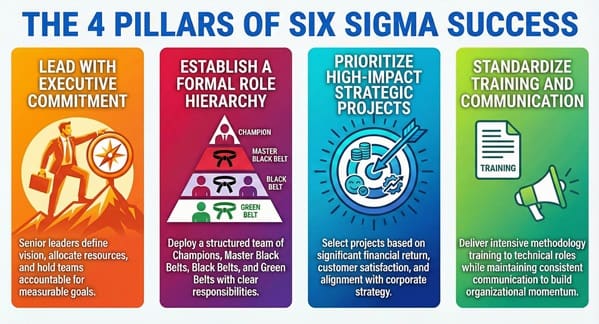
To launch a successful initiative, organizations must focus on several critical deployment components. These elements ensure the effort is focused, resourced, and sustainable.
1. Leadership Commitment and Strategy
Six Sigma Deployment fundamentally starts at the top. The Leadership Council, composed of senior executives, is responsible for the overall success of the deployment. They perform a crucial role in several areas:
- Define the Vision: They set clear, measurable goals for the deployment (e.g., “Reduce production costs by 15% in two years”).
- Allocate Resources: They ensure that adequate funds and personnel are available for training, project execution, and infrastructure.
- Establish Accountability: They measure the performance of the Deployment Team and project leaders against the set goals.
Due to the involvement of the Leadership Council, the organization views the Six Sigma Deployment as a strategic priority, not just another optional training program.
2. Organizational Infrastructure: The Six Sigma Roles
A core part of Six Sigma Deployment is the creation of a formal hierarchy of trained professionals. This structure ensures that dedicated resources manage and execute the projects.
The typical roles comprise:
- Champions: These are senior managers who sponsor and own specific projects, removing roadblocks for the project teams.
- Master Black Belts (MBBs): They are the technical experts and coaches, responsible for training Black Belts and Green Belts, and ensuring the correct application of the Six Sigma methodology.
- Black Belts (BBs): They are full-time project leaders who lead complex, cross-functional improvement projects. They use the DMAIC roadmap extensively.
- Green Belts (GBs): They are part-time team members who lead smaller projects or support Black Belts on larger initiatives within their functional areas.
The effective Six Sigma Deployment assigns clear responsibilities to each role, which is vital for project success.
3. Project Selection and Alignment
A successful Six Sigma Deployment ensures that the projects chosen are strategic. A weak project selection process leads to wasted resources and management frustration.
Six Sigma Deployment should align with the company’s most critical business needs. Therefore, project selection is a rigorous, data-driven activity that includes:
- Financial Impact: Projects must show a clear potential for significant financial return (cost savings, revenue growth).
- Customer Impact: Projects should address issues that directly affect customer satisfaction and loyalty.
- Strategic Fit: Projects must support the overall corporate strategy and goals.
When the Six Sigma Deployment focuses on key areas, it ensures that every successful project acts as a powerful example and drives further buy-in.
4. Training and Communication
Extensive training is a fundamental requirement of Six Sigma Deployment. This training ensures that the employees have the skills to execute their roles effectively. The depth of training depends on the belt level.
- Black Belts and Green Belts receive intensive training in statistical analysis and the DMAIC methodology.
- Champions and Executives receive training focused on project selection, coaching, and change management.
Furthermore, clear and consistent communication is crucial. This communication keeps employees informed about the deployment’s goals, progress, and successes. Regular updates build momentum and ensure that all stakeholders are aware of the benefits Six Sigma Deployment is delivering.
The Step-by-Step Six Sigma Deployment Process
Implementing Six Sigma Deployment requires a systematic, phased approach. The following sequential pattern outlines the typical steps an organization follows.
Step 1: Lay the Groundwork and Gain Executive Buy-in
First, the organization must define the scope of the deployment. You need to establish why Six Sigma is the right solution now.
- Assess the Need: Analyze the current business performance, including customer complaints, scrap rates, and cost of poor quality.
- Secure Leadership Support: The CEO and senior leaders must publicly commit to the initiative. Their commitment is essential because it provides the necessary authority and funding.
Step 2: Establish the Six Sigma Infrastructure
Next, you create the organizational backbone that manages the initiative.
- Form the Leadership Council: This group guides the strategy and makes critical decisions about resources.
- Appoint the Deployment Leader: This person manages the day-to-day deployment activities and reports to the Leadership Council.
- Identify and Train the MBBs: The organization must select individuals with deep technical and leadership skills to serve as Master Black Belts. These MBBs will drive the technical rigor of the deployment.
Step 3: Train and Certify Black Belts and Green Belts
This step focuses on building the workforce capability.
- Select Candidates: Identify high-potential employees for Black Belt and Green Belt training. The Six Sigma Deployment model often pulls these individuals from their daily jobs to work full-time on projects.
- Deliver Training: Provide comprehensive instruction on statistical tools, process mapping, and change management.
- Certify: Certify belts upon successful completion of their training and the execution of a successful project with verified financial results.
Step 4: Identify and Select Initial Pilot Projects
The successful Six Sigma Deployment starts with a set of high-impact pilot projects.
- Use the Selection Criteria: Apply the financial, customer, and strategic criteria to filter potential project ideas.
- Charter Projects: Each selected project receives a formal Project Charter. This document defines the problem, scope, goals (the Y, or output), and team members. Black Belts lead the execution of these projects.
Step 5: Execute Projects and Track Results
This is the core implementation phase where the trained belts apply the methodology.
- Follow DMAIC: The project teams strictly follow the DMAIC methodology. They use data to analyze the root cause and implement solutions.
- Regular Reviews: The Champions and Leadership Council conduct regular project reviews. These reviews ensure projects stay on track, address resource needs, and verify financial savings.
Step 6: Institutionalize and Scale Up
Finally, the organization must make the improvements permanent and expand the scope of the deployment.
- Standardize Processes: The Control phase of DMAIC ensures that the process changes become standard operating procedure (SOP).
- Recognize Success: The organization must celebrate project wins and reward the teams. This recognition is vital for maintaining momentum and encouraging participation.
- Scale the Program: The organization must expand the program to include more functional areas and continue to train more belts.
Also Read: How can Six Sigma Help Marketers?
Why Is Six Sigma Deployment Important for Your Business?
Successfully implementing Six Sigma Deployment offers profound advantages that go straight to your company’s key performance indicators (KPIs).
Focuses on Financial Return
Six Sigma Deployment is firmly rooted in financial results. Every project must justify its existence with a measurable return on investment (ROI). The methodology ensures that teams focus on problems that cost the company the most money, leading to:
- Significant cost reductions by eliminating waste and errors.
- Improved cash flow by shortening cycle times.
- Increased profitability from better quality and efficiency.
Improves Customer Satisfaction
The core of Six Sigma Deployment is addressing what the customer truly values.
- Reduces Defects: By minimizing process variation, the company produces products or services with fewer defects.
- Ensures Consistency: A highly-controlled process guarantees a consistent experience for the customer every time. This consistency enhances customer loyalty.
Fosters a Culture of Data-Driven Decision Making
Six Sigma Deployment transforms how employees think about problems.
- Promotes Fact-Based Decisions: The methodology requires that teams use statistical evidence, rather than gut feeling, to identify and fix root causes.
- Develops Internal Expertise: The training programs create a cohort of problem-solvers (Belts) who can apply these methods to any business challenge.
Frequently Asked Questions About Six Sigma Deployment
What is the main objective of Six Sigma Deployment?
The main objective of Six Sigma Deployment is to embed the Six Sigma methodology into the organization’s culture and operations. The aim is to achieve sustainable, measurable business improvements that are directly tied to the company’s strategic goals and financial targets.
Why must top management be involved in Six Sigma Deployment?
Top management involvement is critical because Six Sigma Deployment is a major change initiative. Management must provide the vision, resources, and authority to ensure the entire company views the initiative as a priority. Without their commitment, the program often stalls due to lack of funding, internal resistance, or competing priorities.
What is the role of a Six Sigma Champion?
A Six Sigma Champion is typically a senior business leader who owns the success of a specific project or area of the deployment. They act as a sponsor for the Black Belt, removing organizational and political roadblocks, ensuring the project aligns with business strategy, and validating the project’s results.
What is the difference between DMAIC and DMADV in deployment?
DMAIC is used in Six Sigma Deployment to Improve existing processes that are not performing well. DMADV is used to Design new products or processes from scratch, ensuring they meet the Six Sigma quality standards before deployment. Both frameworks are essential tools within the overall Six Sigma Deployment strategy.
Key Takeaways
- Six Sigma Deployment is a systematic approach to implement Six Sigma methodology throughout an organization.
- It integrates Six Sigma principles into the company’s core culture to reduce defects and improve profitability.
- Understanding the difference between Six Sigma and Six Sigma Deployment is crucial for effective application.
- Key components of successful deployment include leadership commitment, organizational infrastructure, project selection, and extensive training.
- Implementing Six Sigma Deployment offers significant financial return, improves customer satisfaction, and fosters a culture of data-driven decision making.
Final Words
Six Sigma Deployment is the strategic framework that turns the power of the Six Sigma methodology into tangible business results. It is a commitment to excellence that requires deliberate planning, rigorous training, and unwavering support from leadership. By establishing a clear organizational infrastructure, selecting projects based on financial impact, and consistently applying the DMAIC/DMADV roadmaps, your organization can achieve levels of quality and efficiency that significantly outperform the competition.
We provide the proven methodology and expert coaching to establish a successful Six Sigma Deployment within your company. Let us work with you to implement the right strategy and train your team to deliver these essential, measurable improvements.
You can start your journey toward sustained operational excellence and maximize your company’s profitability today.
Contact us today for Six Sigma Certifications

About Six Sigma Development Solutions, Inc.
Six Sigma Development Solutions, Inc. offers onsite, public, and virtual Lean Six Sigma certification training. We are an Accredited Training Organization by the IASSC (International Association of Six Sigma Certification). We offer Lean Six Sigma Green Belt, Black Belt, and Yellow Belt, as well as LEAN certifications.
Book a Call and Let us know how we can help meet your training needs.