
Textron launched Textron Six Sigma (TSS) in February 2002 as part of a company-wide transformation to become the premier multi-industry company. Textron’s own published materials report training nearly 700 Black Belts and more than 2,200 Green Belts, with the entire senior leadership team, including then-CEO Lewis Campbell, holding Green Belt certification. Specific, named results span multiple business units.
Bell Helicopter won an industry award for a compressed air savings project and built a system recovering $1.5 million annually in unclaimed supplier warranty costs. After Hurricane Katrina, Textron Marine & Land used Six Sigma tools to rebuild a damaged production facility and return Armored Security Vehicle output to 125% of pre-storm capacity.
Quick-Reference Table: Textron Six Sigma Milestones
| Year or Period | Milestone |
| February 2002 | Textron Six Sigma (TSS) officially launches company-wide |
| By 2004 to 2005 | Lean component added as a special emphasis within TSS |
| 2005 to 2006 | Nearly 700 Black Belts and more than 2,200 Green Belts trained |
| Late 2005 | Textron Marine & Land uses Six Sigma tools to recover from Hurricane Katrina |
| 2007 | Bell Helicopter wins iSixSigma Live! award for a compressed air savings project |
| 2007 | John Mayers, VP of Textron Six Sigma and Transformation, presents at a Lean Six Sigma industry summit |
Table of contents
- Quick-Reference Table: Textron Six Sigma Milestones
- How Textron Built Six Sigma Into a Core Business System
- Named Projects: What Six Sigma Actually Fixed at Textron
- Bell Helicopter’s Compressed Air Savings Project
- Recovering Unclaimed Supplier Warranty Costs
- Six Sigma in the Legal Department
- The Hurricane Katrina Recovery: Six Sigma Under Real Pressure
- Why This Example Matters More Than a Routine Project
- Lessons for Other Organizations
- Frequently Asked Questions on Six Sigma at Textron
- Final Words
- Build a Six Sigma Culture That Holds Up Under Pressure with SSDSI
- About Six Sigma Development Solutions, Inc.
How Textron Built Six Sigma Into a Core Business System
Textron did not launch Six Sigma as an isolated training program. The company describes Textron Six Sigma as a key enabler in its transformation journey, built to increase productivity while sharpening the business’s focus on customer needs. This framing matters because Textron positioned Six Sigma as a transformation tool at the corporate strategy level, not a quality department initiative.
The scale of training was substantial and sustained over years, not a single event. Textron’s own figures report nearly 700 Black Belts and more than 2,200 Green Belts trained, with close to 200 Black Belts repatriated back into the broader Textron workforce after completing their assignments.
The company also required leadership buy-in at the very top. The entire senior leadership team held Green Belt certification, and then-CEO Lewis Campbell was himself a certified Six Sigma Green Belt.
A Global, Multitrack Training Structure
Textron built its Green Belt program around specialty tracks, rather than one single curriculum for every candidate. Candidates could train in Lean, design, variation reduction, or rapid problem solving, letting the company match training depth to the actual type of project an employee would lead.
This structure solves a common training design problem. A single generic curriculum often over-trains employees in tools they will rarely use and under-trains them in the specific skill their actual project needs.

Public, Onsite, Virtual, and Online Six Sigma Certification Training!
- We are accredited by the IASSC.
- Live Public Training at 52 Sites.
- Live Virtual Training.
- Onsite Training (at your organization).
- Interactive Online (self-paced) training,
Named Projects: What Six Sigma Actually Fixed at Textron
Bell Helicopter’s Compressed Air Savings Project
Bell Helicopter, a Textron division, won recognition in the environment category at the first iSixSigma Live! Summit & Awards for a project called Compressed Air Savings Headstart, or CASH. To even qualify for that competition, a project needed to show a 90% reduction in defects, a minimum $250,000 return or a five-fold ROI, and at least a two-sigma increase in process sigma level.
Bell Helicopter’s project met this bar in the specific category of environmental impact, tying a Six Sigma methodology directly to a resource efficiency outcome rather than only a cost or quality metric.
Recovering Unclaimed Supplier Warranty Costs
A second named Bell Helicopter project addressed a very different kind of waste: money the company was simply failing to collect. Textron’s own published materials describe a new online system Bell Helicopter built to recoup $1.5 million annually in previously unclaimed warranty costs from suppliers.
This example shows Six Sigma applied to a financial recovery process, not a manufacturing defect, identifying a process gap where money owed to the company was going unclaimed, then building a system specifically to close that gap.
Six Sigma in the Legal Department
Textron also extended Six Sigma into a function rarely associated with process improvement: its corporate law department. CEO Lewis Campbell publicly praised the legal department as one of the most aggressive parts of the company to adopt Six Sigma, in comments made to USA Today. This detail is worth noting specifically because it demonstrates Textron’s claim that Six Sigma applied across all functional areas, not only manufacturing and supply chain.
Also Read: Lean Six Sigma Training Baton Rouge Louisiana
The Hurricane Katrina Recovery: Six Sigma Under Real Pressure
The most vivid documented example of Textron Six Sigma comes from a crisis, not a planned improvement project. In late 2005, Hurricane Katrina damaged a Textron Marine & Land (TM&L) facility responsible for producing the Armored Security Vehicle. Jeff Picard, then senior vice president for operations at Textron Systems, and Clay Moise, vice president for strategy and business development at TM&L, led the recovery effort.
Picard described Six Sigma as already built into the team’s instincts, not a framework they had to consciously apply. Six Sigma was in the team’s DNA, he said, and even though they had never faced anything like Katrina, they knew exactly what process to follow and how to formulate their decisions, often using the tools without deliberately realizing it.
The recovery used two specific, named Six Sigma tools.
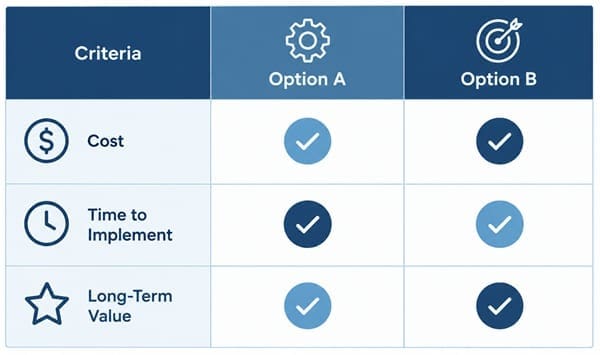
- A Pugh Matrix, a tool designed to compare and select the best solution among multiple options, helped the team decide between repairing the existing facility or starting construction over from scratch. The team chose to repair, the Army agreed, and work began within the first week after the hurricane struck.
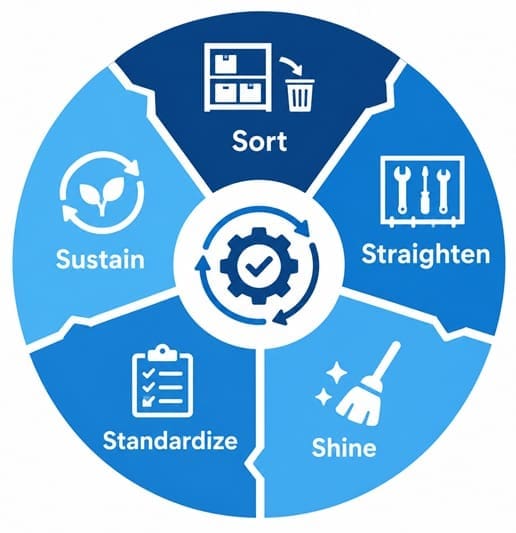
- A 5S exercise, standing for Sort, Straighten, Shine, Standardize, and Sustain, began the physical rehabilitation of the facility. Picard described it as possibly the largest 5S exercise ever performed, starting with sorting the work area down to only essential items, then organizing materials, cleaning thoroughly, and establishing standard procedures the team committed to sustaining going forward.
The recovery’s measurable result was specific. Production of the Armored Security Vehicle reached 125% of pre-Katrina capability following the recovery effort, a figure that directly ties the Six Sigma-driven recovery process to a concrete output recovery, not just a qualitative “things improved” claim.
Why This Example Matters More Than a Routine Project
Most Six Sigma case studies describe a planned improvement initiative with a defined timeline. Textron’s Katrina recovery shows the methodology applied under acute, unplanned pressure, with no time for a formal project charter or a multi-week data collection phase.
This is a meaningful distinction for any organization evaluating whether Six Sigma training actually changes how people think, versus simply teaching them to follow a checklist during a scheduled project.
The team’s ability to reach a decision and begin work within one week suggests the tools had become internalized well enough to use under pressure, not just during a structured, low-stakes improvement event. This is the outcome most Six Sigma programs aim for but rarely document as clearly as Textron’s own account of this recovery.
Also Read: Lean Six Sigma Training Richmond Virginia
Lessons for Other Organizations
Textron’s case study offers four specific, transferable lessons.
- Require leadership certification, not just leadership sponsorship. Textron’s entire senior leadership team, including the CEO, held Green Belt certification, which gave the methodology credibility that a sponsorship-only approach rarely achieves.
- Build specialty tracks into Green Belt training. Offering Lean, design, variation reduction, and rapid problem solving as separate tracks matched training depth to the actual project type, rather than forcing every candidate through one generic curriculum.
- Apply Six Sigma to financial and administrative processes, not only manufacturing. Bell Helicopter’s warranty recovery system and the legal department’s documented Six Sigma use both show the methodology extending well beyond a factory floor.
- Train for crisis-ready thinking, not just scheduled projects. Textron’s Katrina recovery shows the real test of training retention: whether employees can apply the tools instinctively when there is no time for a formal project plan.
Frequently Asked Questions on Six Sigma at Textron
When did Textron launch Six Sigma?
Textron launched Textron Six Sigma (TSS) in February 2002, as part of a company-wide transformation effort aimed at becoming the premier multi-industry company.
How many people has Textron trained in Six Sigma?
Textron’s own published figures report training nearly 700 Black Belts and more than 2,200 Green Belts, with close to 200 Black Belts repatriated into the broader Textron workforce after completing their assignments.
What is a specific example of a Six Sigma project at Textron?
Bell Helicopter, a Textron division, won an industry award for a project called Compressed Air Savings Headstart, and separately built an online system recovering $1.5 million annually in unclaimed supplier warranty costs.
How did Textron use Six Sigma after Hurricane Katrina?
Textron Marine & Land used a Pugh Matrix to decide whether to repair or rebuild a hurricane-damaged facility, then ran a large-scale 5S exercise to rehabilitate the site, ultimately returning Armored Security Vehicle production to 125% of pre-Katrina capability.
Did Textron’s leadership participate in Six Sigma training directly?
Yes. Textron’s entire senior leadership team held Green Belt certification, including then-CEO Lewis Campbell, who was himself a certified Six Sigma Green Belt.
Final Words
Textron’s Six Sigma case study stands out for two reasons most case studies lack: named projects with specific, verifiable figures, and a documented example of the methodology functioning under real crisis pressure rather than only inside a planned initiative.
The Katrina recovery story in particular shows what Six Sigma training is actually supposed to produce: a team that reaches for the right tool instinctively when there is no time to plan, not one that only follows the methodology during a scheduled improvement event.
Combined with specific wins like Bell Helicopter’s award-winning compressed air project and its supplier warranty recovery system, Textron’s record offers a well-documented answer to whether Six Sigma holds up outside a textbook scenario.
Build a Six Sigma Culture That Holds Up Under Pressure with SSDSI
Textron’s results came from training that became instinctive, not just procedural, across every level of the company, including its own CEO. SSDSI delivers IASSC-accredited Yellow Belt, Green Belt, and Black Belt training through onsite, live virtual, public, and self-paced formats, built to give your team the same depth of understanding.
SSDSI has certified 5,322+ professionals across 600+ organizations in 52 cities, backed by a 5-star Google review rating. If your organization wants Six Sigma training that holds up when it matters most, a conversation about the right starting point is a solid next step.
About Six Sigma Development Solutions, Inc.
Six Sigma Development Solutions, Inc. offers onsite, public, and virtual Lean Six Sigma certification training. We are an Accredited Training Organization by the IASSC (International Association of Six Sigma Certification). We offer Lean Six Sigma Green Belt, Black Belt, and Yellow Belt, as well as LEAN certifications.
Book a Call and Let us know how we can help meet your training needs.


