

Staples, once the world’s largest office supplies retailer, ran a documented Lean Six Sigma initiative within its North American Delivery (NAD) supply chain in partnership with Accenture.
According to the case study data, the program shaved roughly four weeks off new store setup time, generated $3.3 million in inventory savings, improved On-Time to Due Date (OTD) performance by 21 percent, and delivered a 10-fold return on investment, with $13 million of a $30 million NAD supply chain budget improvement directly attributed to Lean Six Sigma.
This is one of the more thoroughly documented Lean Six Sigma retail applications available, and it shows the methodology working in exactly the kind of unglamorous operational areas, lease negotiation, freight consolidation, dock layout, where most retail margin actually lives. This guide breaks down what was done, what was measured, and what it means for the current Staples organization following its 2017 change in ownership.
Table of contents
Key Takeaways
- Staples’ Lean Six Sigma work was concentrated in its North American Delivery (NAD) supply chain, not storefront customer service, which is a detail most summaries of this case study skip.
- The documented figures, including the 4-week reduction in store setup time and 21% OTD improvement, come from an Accenture-authored case study on its consulting engagement with Staples, not from a Staples-published report, and this article is explicit about that distinction throughout.
- Staples went from a publicly traded NASDAQ company (SPLS) to a privately held company after being acquired by Sycamore Partners in 2017 for approximately $6.9 billion, according to Staples’ own SEC filings, which is relevant context for understanding the company’s current structure.
- Staples’ own newsroom has publicly used the language of continuous improvement in official communications, including a 2008 press release quoting VP of Environmental Affairs Mark Buckley on driving continuous improvement across the product lifecycle.
- Focused, high-leverage supply chain areas, rather than a company-wide rollout, is what produced Staples’ documented 10-fold ROI, a pattern worth studying by any retailer considering where to start a Lean Six Sigma deployment.
What Actually Happened: Staples and Accenture’s Lean Six Sigma Partnership
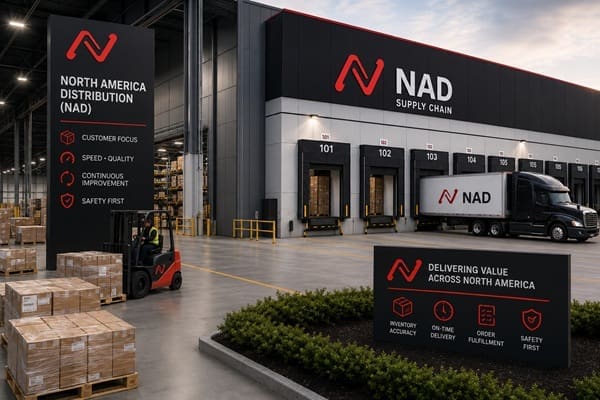
According to a Lean Six Sigma case study, Staples worked with Accenture to apply Lean Six Sigma methodology to specific operational bottlenecks inside its supply chain. The case study attributes the results specifically to Staples’ NAD segment, the business-to-business delivery operation that served enterprise and small-to-medium business customers, rather than to the company’s retail storefronts.
This distinction matters for anyone studying the case: the improvements documented were operational and logistical, the kind of problems every large retailer faces regardless of what it sells, not merchandising or customer-facing changes. That makes the case study broadly applicable to distribution, fulfillment, and logistics operations well beyond office supplies.

Public, Onsite, Virtual, and Online Six Sigma Certification Training!
- We are accredited by the IASSC.
- Live Public Training at 52 Sites.
- Live Virtual Training.
- Onsite Training (at your organization).
- Interactive Online (self-paced) training,
Where Lean Six Sigma Was Applied Inside Staples’ Supply Chain
Store Opening: Lease Negotiation and Construction Process
The case study documents that Staples rebalanced lease negotiations and improved its architectural and construction processes, cutting roughly four weeks off the time needed to open a new store. According to the same source, that time reduction translated into sales gains equivalent to eight new stores’ worth of annual sales, a striking example of how a back-office process improvement can produce front-line revenue impact without a single change to what happens on the sales floor.
Item-Order Cycle: Getting Promotional Inventory to the Right Place at the Right Time
The case study also describes work to streamline the item-order cycle so that promotional items arrived at stores closer to their actual sale dates. This freed physical shelf space, particularly valuable in smaller-format stores, and generated $3.3 million in inventory savings. This is a textbook example of a Lean principle, reducing excess inventory, paired with Six Sigma’s emphasis on timing precision.
Fulfillment Center Operations: Loading Dock Redesign
One fulfillment center reconfigured its loading dock layout, eliminated unnecessary handling of merchandise, and established a dedicated “receiving and put-away team.” The documented result was a 21 percent improvement in On-Time to Due Date (OTD) performance, a core supply chain metric measuring whether goods arrive when promised.
Freight Consolidation Across the Supply Chain
The case study also describes consolidating freight movement from suppliers into Staples’ distribution and fulfillment centers, work that achieved 50 percent of the company’s stretch goal for annual freight budget reduction that year.
The Results, By the Numbers
Adding up the documented figures gives a clearer picture of scale than any single metric on its own. The case study states that the overall NAD supply chain budget came in $30 million ahead of target, with $13 million of that improvement specifically attributed to Lean Six Sigma initiatives, and between $5 million and $7 million of that realized within a single fiscal year (referenced in the source material as FY2007). The case study further states that Staples achieved a 10-fold return on its investment in the Lean Six Sigma program overall.
These are large numbers for what most companies would consider “back office” work: lease terms, loading docks, freight schedules. That is precisely the point. Six Sigma projects with the highest documented ROI tend to target operational friction that never shows up on a customer-facing dashboard but quietly drains margin every single day.
Also Read: Six Sigma in Agriculture Supply Chain: Saving Your Profits from Harvest to Home
What This Case Study Teaches Other Organizations About Deploying Lean Six Sigma
Start With High-Leverage Operational Areas, Not a Company-Wide Rollout
Every documented Staples initiative targeted a specific, bounded process: one fulfillment center’s loading dock, one supply chain segment’s freight consolidation, one part of the store-opening process. None of the documented work describes a blanket, company-wide Six Sigma rollout. This mirrors standard DMAIC practice: define a specific, measurable problem before scaling a solution.
Supply Chain and Logistics Remain Some of the Highest-ROI Six Sigma Targets
Three of the four documented Staples initiatives sit squarely inside logistics: item timing, dock layout, and freight consolidation. For any retailer or distributor evaluating where to start a Lean Six Sigma deployment, this case study is a strong argument for starting in the supply chain rather than in a more visible but lower-leverage area.
External Expertise Accelerated the Work
Staples partnered with an outside consulting organization rather than building the entire program from an internal team alone. This is a common and often underrated pattern: pairing internal process knowledge with external Six Sigma deployment experience tends to move projects faster than either resource working in isolation.
Metrics That Matter to the Business, Not Just to the Six Sigma Team
Every documented result in the Staples case study ties directly to a business metric a CFO or COO would already track: inventory dollars, OTD percentage, freight budget, store opening timeline. This is a useful model for any team building a business case for Lean Six Sigma investment internally.
Staples Today: Corporate History and Current Context
For accuracy, it is worth noting how Staples’ corporate structure has changed since the period this case study describes. According to Staples’ own SEC filings, Staples, Inc. (formerly NASDAQ: SPLS) entered into a definitive merger agreement in June 2017 to be acquired by Sycamore Partners, a private equity firm, in a transaction valuing the company at approximately $6.9 billion, or $10.25 per share. The acquisition closed later that year, and Staples has operated as a privately held company since.
This matters for readers researching “Six Sigma at Staples” today: the documented Lean Six Sigma initiative described above took place under Staples’ prior public-company structure. It is not possible to verify from public sources whether that specific program continues in its original form under current private ownership.
What can be verified is that continuous improvement work persists in some form at the company: a current Staples Canada job posting for an “Operational Excellence Specialist” explicitly describes the role as driving continuous process improvement across Field Operations, indicating that operational improvement discipline remains part of how at least part of the organization operates today.
Staples’ own newsroom also has a documented history of using continuous improvement language in official company communications.
A 2008 Staples press release on the company’s sustainability strategy quotes then-Vice President of Environmental Affairs Mark Buckley describing plans to “drive continuous improvement more quickly across the lifecycle of products,” language consistent with the broader Lean Six Sigma vocabulary, though that specific release addresses sustainability rather than the supply chain initiative detailed above.
Also Read: Supply Chain Risk Management (SCRM)
Why This Case Study Matters If You’re Considering Lean Six Sigma Training
Case studies like this one answer the question every prospective Green Belt or Black Belt candidate eventually asks: does this actually work outside a factory floor? Staples’ documented results say yes, in a services and logistics environment, with numbers a business can verify against its own supply chain metrics. Learning to read a case study like this one, understanding which claims come from the company itself versus a consulting partner, and which metrics tie to real business outcomes, is itself a skill Six Sigma training builds directly.
If you want to build the skills to run a project like this yourself, our live virtual Lean Six Sigma Green Belt and Black Belt courses teach the exact DMAIC framework applied in cases like Staples’ supply chain work, using real project data rather than hypothetical exercises, taught live by Master Black Belt instructors from wherever you are.
Frequently Asked Questions on Six Sigma at Staples
Did Staples achieve official Six Sigma certification as a company?
The documented case study describes a Lean Six Sigma process improvement initiative within Staples’ supply chain conducted with Accenture. It does not describe company-wide Six Sigma certification of Staples as an organization; certification typically applies to individuals, not companies.
Is the Staples Lean Six Sigma program still active today?
That cannot be confirmed from public sources. The documented results describe an initiative from Staples’ prior public-company era. Staples has been privately held since its 2017 acquisition by Sycamore Partners, and no public source confirms whether the original program continues in its original form.
Which part of Staples’ business used Lean Six Sigma?
The documented case study attributes the results specifically to Staples’ North American Delivery (NAD) segment, its business-to-business supply chain and delivery operation, not its retail storefronts.
What was Staples’ return on investment from the program?
The case study states a 10-fold return on investment, with $13 million of a documented $30 million NAD supply chain budget improvement specifically attributed to Lean Six Sigma initiatives.
Final Words
Staples’ documented supply chain work shows Lean Six Sigma delivering measurable results in exactly the kind of operational areas, freight, fulfillment, lease timing, that many companies overlook when scoping a first project. The 10-fold ROI figure did not come from a sweeping transformation; it came from targeted work in a specific business segment, backed by clear metrics.
Six Sigma Development Solutions teaches this same DMAIC discipline through onsite, live virtual, public, and online formats, IASSC accredited, rated 5 stars on Google Reviews, with 5,322+ professionals certified across 600+ organizations in 52 cities. Book your seat in our next live virtual Green Belt or Black Belt session and learn to build a case study like this one for your own organization.
About Six Sigma Development Solutions, Inc.
Six Sigma Development Solutions, Inc. offers onsite, public, and virtual Lean Six Sigma certification training. We are an Accredited Training Organization by the IASSC (International Association of Six Sigma Certification). We offer Lean Six Sigma Green Belt, Black Belt, and Yellow Belt, as well as LEAN certifications.
Book a Call and Let us know how we can help meet your training needs.


