Green manufacturing is much more than a buzzword; it’s a complete shift in how we make things to protect our planet. For years, factories followed a simple “take-make-waste” model. We took raw materials, made products, and tossed the leftovers. But here’s the thing: that old way is costing us too much. To be honest, we’re running out of resources, and the climate isn’t waiting for us to catch up.
In my experience, many business owners worry that going green means losing money. You might think it’s too expensive or complex. But what if I told you that saving the environment actually saves your bottom line?
This guide explores how green manufacturing (GM) works and why it’s the smartest move for your future. We’ve all been there—staring at rising energy bills and wondering if there’s a better way. Well, there is.
Table of contents
What is Green Manufacturing?
Green manufacturing refers to the renewal of production processes and the establishment of environmentally friendly operations. It involves using fewer resources, reducing waste, and cutting out toxic chemicals. Essentially, it’s about making products that don’t hurt the Earth. Roughly speaking, it focuses on three main pillars: the product, the process, and the system.
Think about a standard plastic bottle. In a traditional setup, the factory uses tons of water and electricity. They create chemical runoff. Once you finish the drink, the bottle sits in a landfill for 500 years. In a green setup, that factory uses recycled plastic. They power their machines with solar energy. They even design the bottle so it’s easier to recycle again. Does that make sense? It’s a full circle.

Public, Onsite, Virtual, and Online Six Sigma Certification Training!
- We are accredited by the IASSC.
- Live Public Training at 52 Sites.
- Live Virtual Training.
- Onsite Training (at your organization).
- Interactive Online (self-paced) training,
The Core Goals of GM
- Minimize emissions: Reducing the carbon footprint of every machine.
- Resource efficiency: Getting more “output” from less “input.”
- Waste reduction: Aiming for “Zero Waste to Landfill” status.
- Life cycle thinking: Caring about a product from “cradle to grave.”
Why Green Manufacturing Matters Today?
You might ask, “Why should I change my whole factory now?” To be honest, the market is changing fast. Customers today don’t just want a good product; they want a product that feels good to buy. If you aren’t thinking about your environmental impact, you’re likely leaving money on the table.
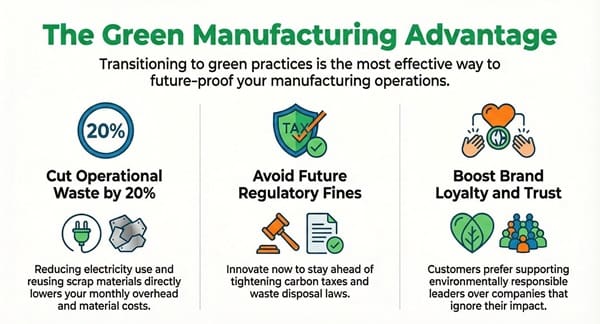
1. Saving on Costs
It’s a common myth that being eco-friendly is a luxury. In reality, green manufacturing helps you find “hidden” waste. When you use less electricity, your bills drop. When you reuse scrap metal instead of buying new, your material costs go down. We’ve seen companies cut waste by 20% just by looking at their trash differently.
2. Staying Ahead of Laws
Governments everywhere are tightening the screws. New rules on carbon taxes and waste disposal are popping up every year. By adopting GM practices now, you don’t have to scramble later. It’s much cheaper to innovate today than to pay a massive fine tomorrow.
3. Boosting Your Brand
People love supporting “green” companies. It builds trust. When you show your clients that you care about their kids’ future, they stay loyal. It’s not just about marketing; it’s about being a leader in your industry.
Also Read: Green Supply Chain Management (GSCM)
Key Strategies in Green Manufacturing
How do we actually do it? It isn’t just about putting a recycling bin in the breakroom. It requires a deep look at your “input” and “output.” Let’s consider the most effective strategies used by top firms today.
The 5R Framework
We can’t talk about green manufacturing without mentioning the 5Rs. These are the building blocks of a sustainable factory:
- Reduce: Use less raw material and energy.
- Reuse: Find a second life for scrap materials or water.
- Recycle: Turn waste into new products.
- Remanufacture: Fix up old products to make them “like new.”
- Redesign: Change the product so it uses fewer toxins.
Lean and Green
Many of you might know about “Lean Manufacturing.” It’s all about speed and efficiency. “Green” takes that a step further. While Lean focuses on saving time, Green focuses on saving the planet. When you combine them, you get a powerhouse system that’s both fast and clean.
Common Challenges You Might Face
I want to be real with you. Switching to green manufacturing isn’t always a walk in the park. There are hurdles, but none of them are deal-breakers if you have a plan.
- High Initial Cost: New, energy-efficient machines can be pricey. However, the “payback period” is usually shorter than you think.
- Lack of Knowledge: Sometimes, we just don’t know where to start. This is where bringing in a consultant or using AI-driven energy audits helps.
- Supply Chain Issues: You can be green, but if your suppliers aren’t, it hurts your goal. You have to vet your partners carefully.
Also See: Online Lean Six Sigma Green Belt Certification
Real-World Examples: Success Stories
Let’s look at how some big players do it. Picture this: a massive car plant that produces zero waste. Sounds impossible? Companies like Subaru and Toyota have already done it. They recycle everything—from metal shavings to the plastic wrap on incoming parts.
Another example involves the textile industry. Traditional dyeing uses massive amounts of water. Some green factories now use “dry dyeing” technology. It uses CO2 instead of water to press color into the fabric. The result? Zero water waste and a much smaller footprint.
How to Start Your Green Journey
Now, let’s discuss how you can start. You don’t need to change everything overnight. In my view, the best approach is to start small and scale up.
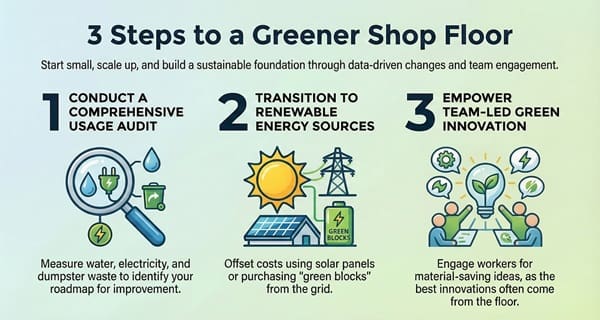
Step 1: Conduct an Audit
You can’t fix what you don’t measure. Check your water meters and electricity bills. Look at your dumpsters. Where is the most waste happening? This data is your roadmap.
Step 2: Swap Your Energy Source
If you can, move toward renewables. Even adding a few solar panels can offset your peak-time energy costs. Many power companies now offer “green blocks” where you can buy wind or solar power directly from the grid.
Step 3: Train Your Team
Your workers are your best assets. Often, the person working the machine knows exactly how to save material. Ask them for ideas! We’ve found that some of the best green innovations come from the shop floor, not the boardroom.
The Future of Green Manufacturing
Fast-forward to ten years from now. Green manufacturing won’t be an “extra” feature; it will be the standard. Technologies like 3D printing (additive manufacturing) are already helping. They only use the exact amount of material needed, leaving almost zero scrap.
We’re also seeing a rise in “Circular Economy” thinking. This is wherein a product is designed to be taken apart at the end of its life so the parts can be used again. It’s a smart, self-sustaining loop.
Frequently Asked Questions (FAQs) on Green Manufacturing
Is green manufacturing only for large corporations?
Not at all! Small shops can benefit even more. Since small businesses have tighter margins, saving 10% on energy or materials can make a huge difference in monthly profit.
What is the difference between “Green” and “Sustainable”?
They are cousins. “Green” usually refers specifically to the environmental impact (pollution, waste). “Sustainable” is broader, including social and economic health.
Does GM actually improve product quality?
Often, yes. When you focus on precision and reducing waste, you usually end up with a more consistent, higher-quality product.
Key Takeaways
- Green manufacturing saves money by reducing waste and energy use.
- It helps companies stay compliant with growing environmental laws.
- The 5R framework (Reduce, Reuse, Recycle, Remanufacture, Redesign) is the core of the process.
- Starting with a simple audit is the best way to begin.
- Customers prefer brands that show a real commitment to the Earth.
Final Words
At the end of the day, green manufacturing is about building a future that lasts. We’re not just making parts; we’re making a legacy. To be honest, the transition might feel big, but the rewards—both for your wallet and the world—are worth it. Our company believes in supporting those who take these brave steps toward a cleaner planet. We’re here to help you navigate this shift with ease and confidence.

About Six Sigma Development Solutions, Inc.
Six Sigma Development Solutions, Inc. offers onsite, public, and virtual Lean Six Sigma certification training. We are an Accredited Training Organization by the IASSC (International Association of Six Sigma Certification). We offer Lean Six Sigma Green Belt, Black Belt, and Yellow Belt, as well as LEAN certifications.
Book a Call and Let us know how we can help meet your training needs.