Implementing a Six Sigma change project is a powerful way to improve processes, reduce waste, and increase efficiency. However, many projects face hurdles that can derail progress or lead to failure. Understanding these common barriers and risks is crucial for project leaders to navigate challenges and deliver results.
This article explores the typical obstacles and risks encountered in Six Sigma initiatives and offers practical advice on how to overcome them for a successful outcome.
Table of contents
Common Barriers to Six Sigma Project Success
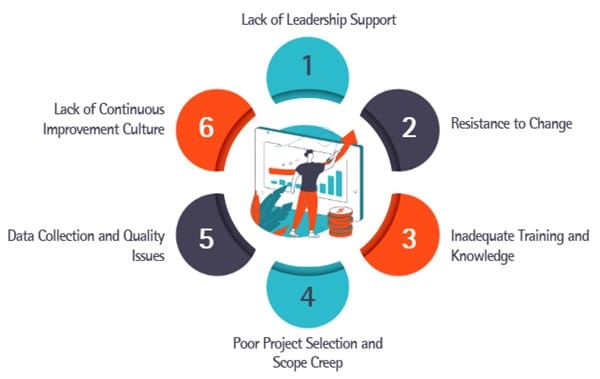
Many Six Sigma projects fail or stall because of organizational and operational barriers. Identifying and addressing these early increases your project’s chance of success.
Lack of Leadership Support
One of the biggest barriers is insufficient backing from top management. Without visible leadership engagement and endorsement, Six Sigma projects often lose momentum. Leaders must commit resources, time, and reinforcement of project goals to foster a culture of improvement.
Resistance to Change
Change can be uncomfortable. Employees and teams accustomed to current processes may resist Six Sigma implementations, fearing disruption, job loss, or extra work. Resistance can stall progress or dilute the intended impact of improvements.
Inadequate Training and Knowledge
Six Sigma relies on statistical methods and data-driven tools, which many team members may find complex. Insufficient or superficial training often leads to misuse of Six Sigma concepts or frustration among participants, undermining project outcomes.
Poor Project Selection and Scope Creep
Choosing the wrong project or letting the scope expand uncontrollably exerts pressure on schedules and budgets. Projects disconnected from strategic goals or lacking clear boundaries waste time and resources.
Data Collection and Quality Issues
Successful Six Sigma depends on accurate, reliable data. Organizations often struggle with data availability, collection methods, or data integrity, all of which can lead to flawed analysis and poor decisions.
Lack of Continuous Improvement Culture
Without a culture that embraces ongoing feedback, learning, and process improvement, Six Sigma efforts may be seen as one-off initiatives rather than sustainable change. This limits long-term success.

Public, Onsite, Virtual, and Online Six Sigma Certification Training!
- We are accredited by the IASSC.
- Live Public Training at 52 Sites.
- Live Virtual Training.
- Onsite Training (at your organization).
- Interactive Online (self-paced) training,
Risks That Can Impact Six Sigma Change Projects
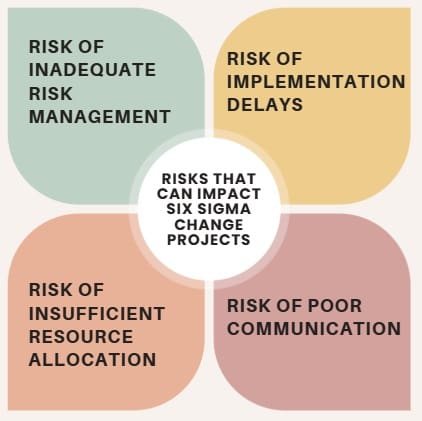
Beyond barriers, Six Sigma projects face inherent risks that need proactive management:
Risk of Implementation Delays
Complex projects often encounter timeline delays due to unanticipated challenges such as resource unavailability or unforeseen technical issues.
Risk of Poor Communication
Lack of transparent, frequent communication among stakeholders can cause misunderstandings, erode trust, and decrease buy-in necessary for change initiatives.
Risk of Insufficient Resource Allocation
Projects may suffer if insufficient budget, tools, or skilled personnel are allocated. Without proper resources, teams struggle to meet objectives.
Risk of Inadequate Risk Management
Failing to identify and mitigate potential risks, such as technology failures or stakeholder conflicts, can quickly jeopardize project outcomes.
Also Read: Common Sources of Measurement Bias in Six Sigma Projects
How to Overcome Barriers and Manage Risks Effectively
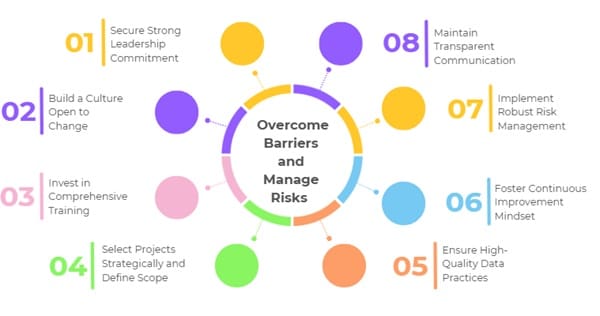
Success in Six Sigma change projects comes down to planning, engagement, and adaptability.
Secure Strong Leadership Commitment
Engage senior leaders early and continuously. Demonstrate Six Sigma’s value through expected ROI and strategic alignment. Visible leadership champions motivate teams and secure necessary resources.
Build a Culture Open to Change
Communicate the benefits of Six Sigma clearly. Involve employees in planning, address their concerns, and celebrate quick wins to build momentum and reduce resistance.
Invest in Comprehensive Training
Provide all participants with tailored education on Six Sigma tools and data analysis techniques. Use ongoing mentorship to help teams apply skills confidently.
Select Projects Strategically and Define Scope
Use data-driven methods to pick projects aligned with organizational goals. Clearly define project boundaries and objectives upfront to prevent scope creep.
Ensure High-Quality Data Practices
Train teams on proper data collection and validation. Implement user-friendly tools and emphasize data accuracy from the start.
Foster Continuous Improvement Mindset
Encourage regular feedback, lessons learned sessions, and recognition of improvements to sustain momentum beyond initial projects.
Implement Robust Risk Management
Identify potential risks early via brainstorming and historical data. Prioritize risks based on impact and likelihood. Develop mitigation plans and continuously monitor risk throughout the project lifecycle.
Maintain Transparent Communication
Keep stakeholders informed about progress, challenges, and successes with regular updates. Transparency builds trust and facilitates timely problem-solving.
What’s Next? Taking Action for Your Six Sigma Project
Successful Six Sigma practitioners move beyond theory to apply these principles in real-world settings. To boost your project’s success rate:
- Engage your leadership team and secure their endorsement.
- Provide training and mentorship to your project team.
- Use data to drive project selection and decision-making.
- Establish clear scopes and timelines.
- Plan for risks and monitor them actively.
- Communicate consistently with all stakeholders.
Every project is unique, but mastering these foundational elements propels your Six Sigma change initiative toward measurable results.
Also Read: Six Sigma Projects and Ideas
Frequently Asked Questions (FAQs)
Q1: What is the biggest barrier to Six Sigma project success?
Lack of strong leadership support is often cited as the biggest obstacle. Without committed leaders championing the project, it struggles to get resources and attention.
Q2: How can resistance to change be minimized in Six Sigma projects?
Clear communication about benefits, involving employees in the process, and showcasing early wins helps reduce resistance.
Q3: Why is proper training crucial for Six Sigma success?
Six Sigma involves complex statistical tools that require understanding to apply properly. Without training, misuse can lead to inaccurate conclusions and failed projects.
Q4: What is scope creep and how does it affect Six Sigma projects?
Scope creep means uncontrolled changes or growth in a project’s scope. It often results in delays, budget overruns, and diluted focus.
Q5: How should risks be managed in Six Sigma projects?
Identify potential risks early, assess their impact and likelihood, develop mitigation plans, and continuously monitor risks throughout the project.
Final Words
While Six Sigma change projects offer significant benefits, they are not without challenges. Understanding common barriers like leadership gaps, resistance, inadequate training, and risks such as poor communication and scope creep is essential.
By proactively addressing these obstacles and applying strong project and risk management practices, organizations can improve success rates and realize lasting process improvements.
Effective Six Sigma leaders combine technical expertise with strong communication, strategic thinking, and cultural awareness to lead their projects to success.

About Six Sigma Development Solutions, Inc.
Six Sigma Development Solutions, Inc. offers onsite, public, and virtual Lean Six Sigma certification training. We are an Accredited Training Organization by the IASSC (International Association of Six Sigma Certification). We offer Lean Six Sigma Green Belt, Black Belt, and Yellow Belt, as well as LEAN certifications.
Book a Call and Let us know how we can help meet your training needs.