A Compliance Management System is how your business stays on the right side of the law while keeping operations smooth and ethical. It is not just a stack of papers or a digital folder. Think of it as the “brain” of your company’s legal health. It watches over every move to make sure you follow rules, regulations, and internal policies.
To be honest, we’ve all felt the stress of new laws popping up. Whether you are in banking, healthcare, or tech, rules change fast. If you don’t have a plan, you’re just waiting for a fine. But what exactly makes up this system? Is it just for big banks, or does your small business need one too?
In my experience, a solid CMS is the difference between a thriving brand and a legal disaster. Let’s break down how it works and why it matters to you.
Table of contents
What is a Compliance Management System?
A Compliance Management System (CMS) is a whole-company approach to managing legal requirements. It includes the documents, processes, and people who ensure your team follows the law. According to the FDIC, a good system helps you find and fix risks before they become big problems.
The primary goal is simple: follow the rules. This includes federal laws, state rules, and even your own company’s promises to customers. Without a CMS, you’re basically driving a car without a dashboard. You might be speeding or running out of gas, but you won’t know until the police pull you over.

Public, Onsite, Virtual, and Online Six Sigma Certification Training!
- We are accredited by the IASSC.
- Live Public Training at 52 Sites.
- Live Virtual Training.
- Onsite Training (at your organization).
- Interactive Online (self-paced) training,
Why Do We Use a CMS?
We use a Compliance Management System to create a culture of doing the right thing. It’s not just about avoiding jail time or heavy fines. It’s about building trust. When customers know you follow strict rules, they feel safer giving you their money or data.
Here is the thing: regulators like the CFPB (Consumer Financial Protection Bureau) look for these systems. If they see you have a strong CMS, they might be more lenient during an audit. It shows you are trying your best to protect the public.
Core Pillars of a Compliance Management System
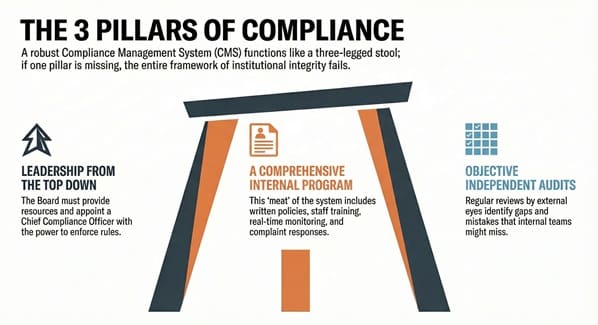
To build a strong CMS, you need three main parts. Most experts call these the “legs of the stool.” If one is missing, the whole thing falls over.
1. Board and Management Oversight
Everything starts at the top. If the CEO doesn’t care about rules, the staff won’t either. The Board of Directors must provide the resources needed. They should appoint a Chief Compliance Officer (CCO) who has the power to say “no” to bad ideas.
In a healthy Compliance Management System, management reviews reports regularly. They don’t just set it and forget it. They ask: “Are we following our own rules?” and “Do we have enough people to watch the doors?”
2. The Compliance Program
This is the “meat” of your system. It includes your written policies. You can’t expect people to follow rules they haven’t read. A good program covers:
- Policies and Procedures: The “how-to” guide for your business.
- Training: Teaching your team what the rules are.
- Monitoring: Checking work in real-time.
- Consumer Complaint Response: Listening to what customers say is wrong.
3. Independent Audit
You need a fresh set of eyes. An audit is when someone from outside the daily work checks the Compliance Management System. They look for gaps or mistakes that the team might have missed. This ensures your system stays honest and effective.
Also Read: Compliance and Risk Management
How Does a Compliance Management System Benefit You?
Why spend time on this? It sounds like a lot of work, doesn’t it? Well, the benefits far outweigh the effort.
Risk Reduction
A Compliance Management System acts like a shield. It helps you spot “compliance risk”—the chance that you’ll break a law. By catching these issues early, you save thousands (or millions) in legal fees.
Better Decision Making
When you have clear data from your CMS, you can make better choices. You’ll know which products are risky and which ones are safe to grow. It gives you a clear map of the legal “landscape” without using that overused buzzword!
Improved Reputation
We’ve all seen the news when a company gets caught cheating. It’s hard to win back customers after that. A strong CMS keeps your brand name clean. It proves you value integrity over a quick buck.
Key Steps to Implement Your CMS
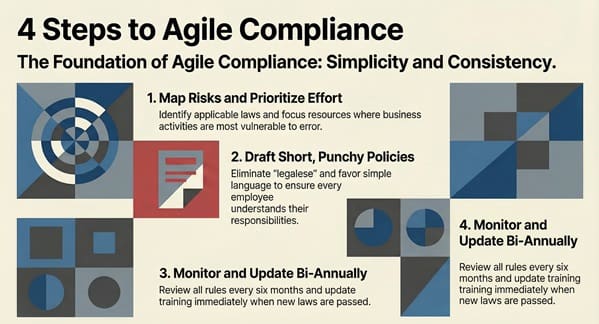
Ready to start? Don’t try to do everything at once. In my view, it’s better to build a simple system that works than a complex one that people ignore.
Step 1: Conduct a Risk Assessment
You can’t fix what you don’t know. Start by listing every law that applies to you. Then, look at your business activities. Where are you most likely to mess up? Focus your Compliance Management System there first.
Step 2: Write Clear Policies
Avoid using “legalese.” Use simple words so every employee knows what to do. If a policy is 50 pages long, nobody will read it. Keep it short and punchy.
Step 3: Train Your Staff
Training is not a one-time event. It should happen when someone is hired and then every year after. Use real-life examples. Instead of saying “Don’t share data,” show them a story of what happens when data is leaked.
Step 4: Monitor and Update
Laws change. Your Compliance Management System must change too. Set a schedule to review your rules every six months. If a new law passes, update your training immediately.
Also Read: How Six Sigma in Legal Services Can Fix Your Firm’s Hidden Inefficiency
The Role of Technology in Modern Compliance
Can you do this with just spreadsheets? Maybe. But it’s tough. Most modern companies use software to help manage their Compliance Management System.
These tools can automate the boring stuff. They send alerts when a task is late or when a new regulation is published. While the tech helps, remember that a tool is only as good as the person using it. You still need human judgment to make the big calls.
Common Mistakes to Avoid
Even with the best intentions, things can go wrong. Here are some traps I’ve seen companies fall into:
- The “Paper” System: Having a manual on the shelf that no one uses. If it’s not active, it’s not a system.
- Lack of Authority: Giving the compliance officer a title but no power to change things.
- Ignoring Complaints: Consumer complaints are “free” audits. They tell you exactly where your CMS is failing.
- One-Size-Fits-All: Copying a big bank’s system when you are a small firm. Your system must fit your specific risks.
Frequently Asked Questions (FAQs)
What is the difference between a CMS and a regular audit?
An audit is a checkup, like a doctor’s visit. A CMS is your daily diet and exercise. It is the ongoing process that keeps you healthy between audits.
Who is responsible for the Compliance Management System?
The Board of Directors is ultimately responsible, but every employee plays a part. From the person answering the phone to the person writing the code, everyone must follow the set rules.
Does a small business really need a CMS?
Yes! While a small shop doesn’t need a 20-person team, they still need a Compliance Management System. It might just be a few clear checklists and a monthly review meeting.
How often should we update our compliance policies?
At a minimum, you should review them once a year. However, if a major law changes or you launch a new product, you should update them right away.
Key Takeaways
- A Compliance Management System is a formal way to ensure your company follows all laws and regulations.
- The three pillars are Board Oversight, a solid Program, and an Independent Audit.
- A strong system builds customer trust and reduces the risk of heavy fines.
- Training and communication are just as important as the rules themselves.
- Technology can help, but human oversight remains the most critical factor.
Final Words
Building a Compliance Management System is a journey, not a destination. It requires constant work, honest talk, and a commitment from the top. When we prioritize doing things the right way, we don’t just protect our companies—we protect our customers and our community.
At our core, we value clarity and integrity. We believe that legal safety shouldn’t be a mystery. By putting a strong system in place, you’re not just following rules; you’re setting a standard for excellence. Let’s make compliance a strength, not a chore.

About Six Sigma Development Solutions, Inc.
Six Sigma Development Solutions, Inc. offers onsite, public, and virtual Lean Six Sigma certification training. We are an Accredited Training Organization by the IASSC (International Association of Six Sigma Certification). We offer Lean Six Sigma Green Belt, Black Belt, and Yellow Belt, as well as LEAN certifications.
Book a Call and Let us know how we can help meet your training needs.